
We’ve all heard that eight hours is the “magic number” for a good night’s rest. But is that a universal truth or just a simplified myth? According to experts in neurology, sleep requirements aren’t one-size-fits-all—they evolve significantly as we move through different stages of life.
Dr. Sudhir Kumar, a prominent neurologist, recently highlighted how our biological need for rest shifts from infancy to old age. To help you optimize your health, we’ve broken down the latest sleep guidelines and the science behind them.
The Essential Sleep Chart: Recommended Hours by Age
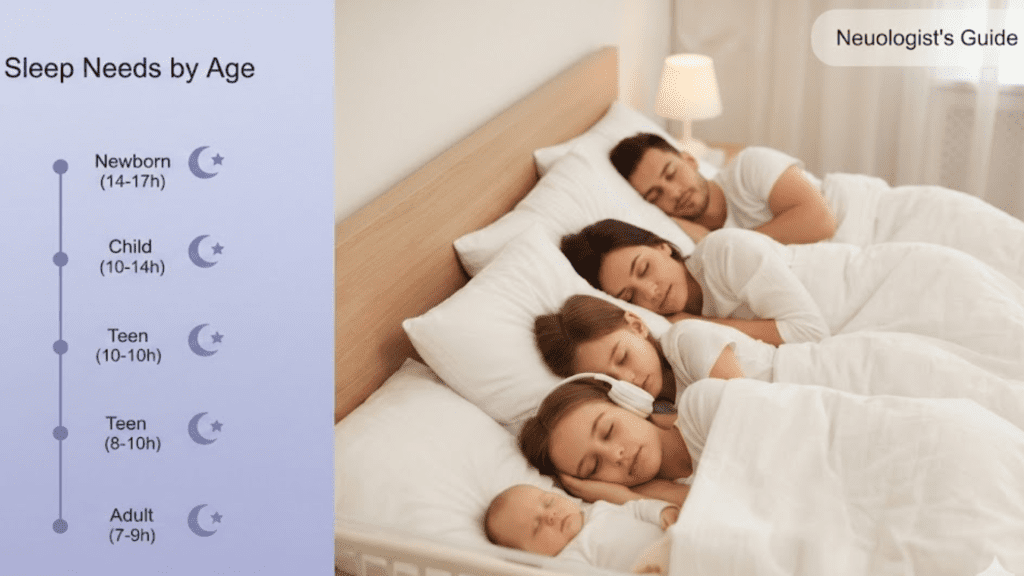
While individual needs can vary based on genetics and lifestyle, major health organizations like the National Sleep Foundation generally agree on the following daily totals:
-
Newborns (0–3 Months): 14 to 17 hours
-
Infants (4–12 Months): 12 to 16 hours (including naps)
-
Toddlers & Young Children (1–5 Years): 10 to 14 hours (including naps)
-
School-Aged Children (6–12 Years): 9 to 12 hours
-
Teenagers (13–18 Years): 8 to 10 hours
-
Adults (18+ Years): 7 to 9 hours
Why Do Infants Need So Much More Sleep?
It’s not just about “resting.” For babies and young children, sleep is the primary time for physical and neurological growth. During these deep-sleep periods, the brain is busy forming neural connections, consolidating early memories, and releasing growth hormones. As the brain reaches structural maturity in adulthood, the role of sleep shifts from “building” to “maintaining”—repairing cells and clearing out toxins.
The Risks of Falling Short
Missing out on even an hour or two of required rest isn’t just a matter of feeling groggy. Chronic sleep deprivation acts as a slow-moving toxin to the body.
-
Short-term effects: Reduced concentration, irritability, weakened immune response, and slower reaction times (similar to being intoxicated).
-
Long-term risks: Persistent sleep loss is linked to serious conditions including hypertension, heart disease, obesity, type 2 diabetes, and an increased risk of neurodegenerative diseases like Alzheimer’s.
Quality vs. Quantity: The “8-Hour Myth”
Neurologists emphasize that quality is just as vital as duration. If you spend 9 hours in bed but wake up frequently or have poor sleep architecture (not enough REM or deep sleep), you may still feel the effects of sleep deprivation.
Additionally, some people are genetically “short sleepers,” functioning perfectly on 6.5 hours, while others may need a full 9 to feel alert. The best gauge is how you feel during the day: if you’re productive and don’t feel the need for caffeine to survive the afternoon, you’re likely hitting your personal sweet spot.
3 Tips for Better Sleep Hygiene
If you’re struggling to hit these targets, consider these neurologist-recommended adjustments:
-
Consistency is King: Go to bed and wake up at the same time every day, even on weekends, to stabilize your internal clock.
-
The Golden Hour: Avoid screens (phones, tablets, TVs) at least 60 minutes before bed. The blue light suppresses melatonin, the hormone that tells your brain it’s time to sleep.
-
Optimize the Environment: Keep your bedroom cool, dark, and quiet.