The healthcare sector is expanding at an unprecedented rate, offering a diverse range of opportunities for students passionate about science and medicine. However, a common dilemma many face is choosing between two powerhouse degrees: Pharmacy and Biotechnology.
While both fields are interconnected and focus on improving human health, they offer very different academic experiences and career trajectories. In this guide, we break down the core differences to help you decide which path aligns with your goals.
1. Defining the Core Focus
What is Pharmacy?
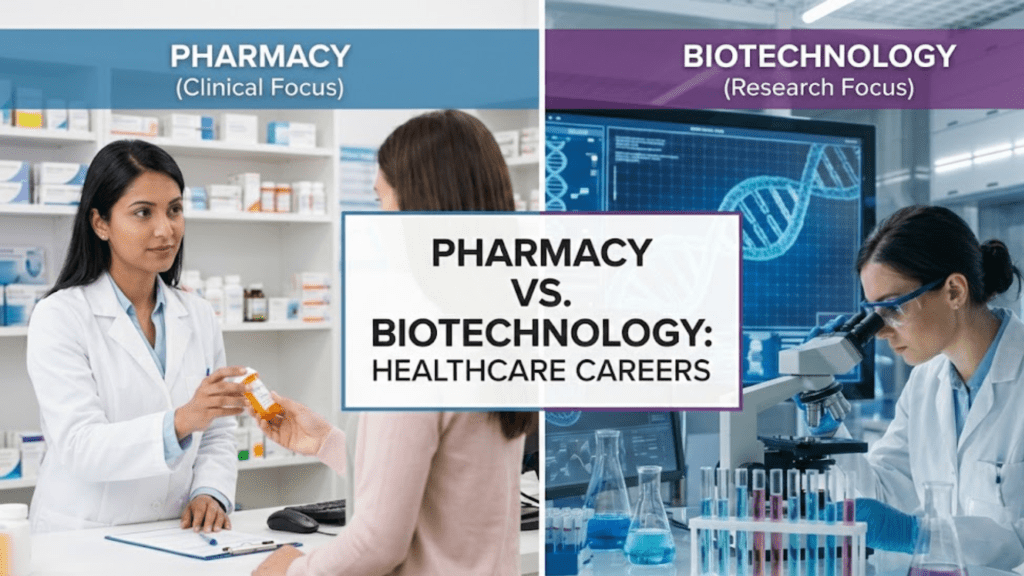
Pharmacy is primarily a clinical and patient-oriented field. It focuses on the science of preparing, dispensing, and managing medications. As a pharmacist, you are the final checkpoint in the healthcare chain, ensuring that patients receive the correct dosage and understand how their medications interact with their bodies.
What is Biotechnology?
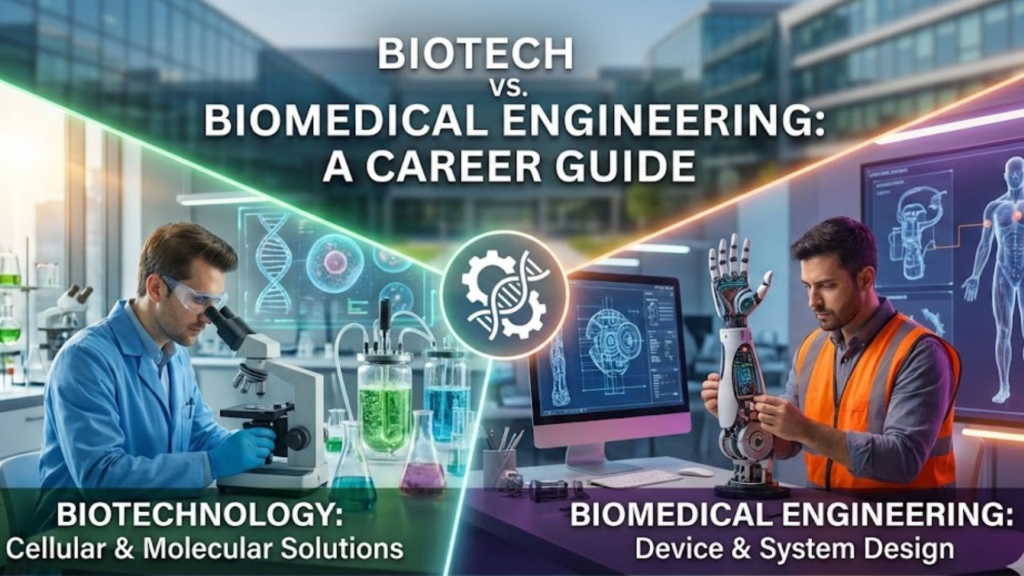
Biotechnology is a research-heavy field that merges biology with technology. It involves using living organisms or biological systems to develop or create products—such as vaccines, genetically modified crops, or life-saving therapies. It is less about the “dispensing” and more about the “discovery” and “engineering” of solutions.
2. Academic Curriculum: What Will You Study?
-
Pharmacy: The curriculum is heavily focused on pharmacology, chemistry, human anatomy, physiology, and clinical practice. Students learn about drug formulations, toxicology, and the legalities of the pharmaceutical industry.
-
Biotechnology: This degree focuses on genetic engineering, molecular biology, microbiology, bioinformatics, and biochemistry. The emphasis is on laboratory techniques and understanding biological processes at a cellular level.
3. Career Opportunities and Roles
Career Paths in Pharmacy
-
Retail/Hospital Pharmacist: Managing medication and consulting with patients.
-
Clinical Research Associate: Monitoring clinical trials for new drugs.
-
Quality Control (QC) Manager: Ensuring pharmaceutical products meet safety standards.
-
Drug Inspector: Working with government agencies to regulate drug manufacturing.
Career Paths in Biotechnology
-
Biomedical Researcher: Working in labs to discover cures for diseases.
-
Geneticist: Studying DNA and hereditary conditions.
-
Bio-Process Engineer: Designing large-scale systems to manufacture biological products.
-
Food/Agricultural Scientist: Using biotech to improve crop yields and food safety.
4. Work Environment: Lab vs. Clinic
One of the biggest deciding factors is where you want to work:
-
Pharmacy professionals often work in fast-paced environments like hospitals, community pharmacies, or regulatory offices. There is a high level of human interaction.
-
Biotechnology professionals usually find themselves in research laboratories, manufacturing plants, or tech-driven corporate offices. The work is often more solitary or collaborative within a team of scientists.
5. Salary and Growth Potential
Both fields offer competitive salaries, but the growth drivers differ:
-
Pharmacy offers high job stability. Every community needs a pharmacist, making it a “recession-proof” career. Salary growth is steady but can plateau unless you move into pharmaceutical management.
-
Biotechnology is high-risk, high-reward. While entry-level roles may pay similarly to pharmacy, specialized researchers in fields like CRISPR or stem cell therapy can see exponential salary growth as they innovate.
Final Verdict: Which One Should You Choose?
-
Choose Pharmacy if: You enjoy clinical settings, want a clear licensing path (like the Pharm.D), and are interested in patient care and the chemical side of medicine.
-
Choose Biotechnology if: You are driven by innovation, enjoy spending hours in a laboratory, and want to be on the cutting edge of scientific discovery and genetic engineering.
Credits: MSN HEALTH